
What valet parking costs a business comes down to three things: how many attendants the arrival curve requires, what it costs to insure custody of the keys, and whether the guest pays at the stand or you do.
The question rarely arrives in the abstract. It arrives because the lot fills at seven on a Friday and guests are circling the block. Because a brand standard review flagged the arrival experience. Because a damage claim landed on your desk and nobody could say who was responsible for it. Or because the current vendor raised their rate and you have no way to judge whether the new number is fair.
The answer most operators give is an hourly rate. It explains almost nothing. Here is what actually sets the number.
Why an Hourly Rate Tells You Almost Nothing
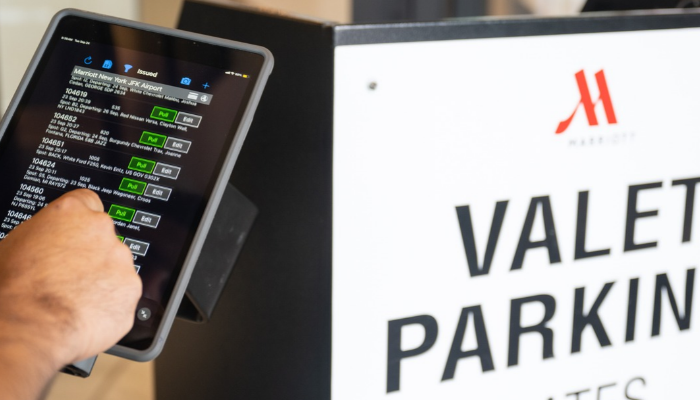
A valet proposal quoted as an hourly attendant rate hides the two decisions that actually set your annual cost, which are how many attendants and for how many hours.
Two operators can quote an identical hourly rate and propose budgets thousands of dollars apart, because one staffed to your peak and the other staffed to your average. The rate is the easiest line to compare across proposals and the least informative one in any of them.
It also rewards the wrong behavior. An operator who wins on rate by thinning the staffing plan delivers exactly the problem you were trying to solve: a line at the stand on your busiest night, in front of the guests who matter most. What you are buying when you buy valet parking services is a staffing plan that holds, and underbid plans tend to surface as coverage failures inside the first two quarters.

Labor Is the Number, and the Arrival Curve Sets It
Labor is close to the entire cost of a valet operation, and the headcount is set by how fast cars arrive at peak rather than by how many arrive across the night.
Three hundred covers spread evenly over five hours is a different operation from three hundred covers where a hundred and forty arrive between seven and seven forty-five. Same night, same revenue, different staffing plan. Price the peak, because that is the moment that produces either a smooth arrival or a review that mentions parking.
Start from hours. Two attendants on a six-hour dinner shift, four nights a week, is roughly 2,500 attendant hours a year before a single event night or holiday surge. That number is the base of the budget and everything else stacks on top of it.
Then price the hour. Valet wages that sat around $12 to $15 an hour have moved to $16 to $20 and above in competitive markets (valet industry trend reporting, 2026). The rate you are quoted is not that wage. It carries payroll taxes, workers' compensation at the attendant class rate, uniforms, training, supervision, and the operator's margin on top of it.
You also cannot staff a 45-minute peak with a 45-minute shift. Practical minimum shift lengths mean the spike you are solving for carries paid hours on either side of it, which is why a peak-heavy operation costs more per car than a steady one.
Arrival patterns are what make this property-specific rather than category-specific. Hotel valet parking is staffed against check-in, check-out, and whatever the restaurant or event space adds in the evening, which is three peaks in a day rather than one.
Healthcare parking operations run a different shape again: a heavy morning arrival, a discharge peak in the early afternoon, and a coverage requirement that does not care whether it is a holiday.
Events are the sharpest version of the problem, because the whole night arrives inside about forty minutes and leaves inside twenty. Event venue parking gets priced per event rather than per hour for exactly that reason, and a venue that budgets it as a standing weekly cost will be wrong in both directions.
The Cost Driver Nobody Prices: How Far the Cars Go
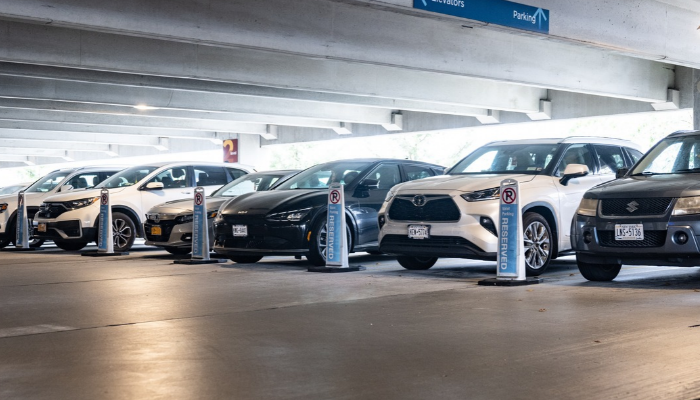
The round-trip distance between your door and where cars actually park sets the cycle time per vehicle, and cycle time drives headcount more directly than volume does.
A two-minute round trip and a six-minute round trip are different operations at the same arrival rate. At six minutes every car consumes three times the attendant-minutes, so you need more attendants to hold the same queue length at the stand. Operators price this whether or not they explain it, which is a good reason to time the run yourself before you read anybody’s staffing plan.
It also means a cheaper lot is not always a cheaper operation. Offsite parking at a lower rent can cost more in labor than it saves in rent, and the comparison is only honest when both sides are on the table. Where the distance is long enough that valet cycle time stops working at all, shuttle and transportation programs are usually cheaper than adding attendants.
Technology moves the same number. Key tracking and retrieval requests sent ahead of the return trip let attendants batch runs instead of waiting at the podium, which is a labor question as much as a guest experience one. What matters for the budget is whether the proposal names the system and says who pays to run it. Our parking technology belongs on the budget as a line, not folded invisibly into an hourly rate.
Insurance Is a Real Line, Not a Checkbox
Taking custody of a guest’s keys puts you in a different insurance position than owning a parking lot, and that position carries a price.
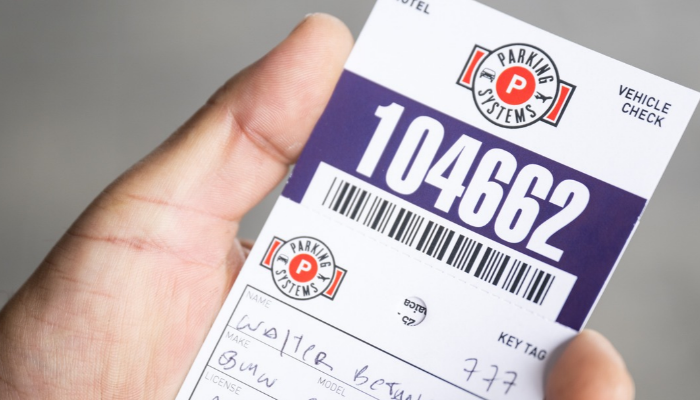
Attended valet is generally treated as bailment. Custody shifts the burden of proof to whoever held the keys, and a posted disclaimer sign is not a liability program. Courts frequently decline to enforce that signage, which means the real protection is the policy rather than the placard.
So the question is not whether an operator is insured. It is what the limits are, which coverages are actually in place, and how a claim moves once one is filed. Ask for:
The limits on garage liability and garagekeepers legal liability, in writing, with a sample certificate
Whether the operator’s policy is primary, and whether you are named as additional insured
The deductible, and which party pays it on a routine door ding
The claims process: who the guest talks to, how quickly, and who decides
The operator’s loss history, because a bad loss run prices into your rate whether it is itemized or not
That last one is why every damage claim ending up on your desk is a cost problem and not only a service problem. A claim adjudicated by your front desk manager gets paid for in their time and in whatever they give away to end the conversation. Insurance limits and claims process belong in the solicitation alongside the staffing plan, not in a follow-up email after the award.
Who Pays Decides Whether Valet Is a Cost at All
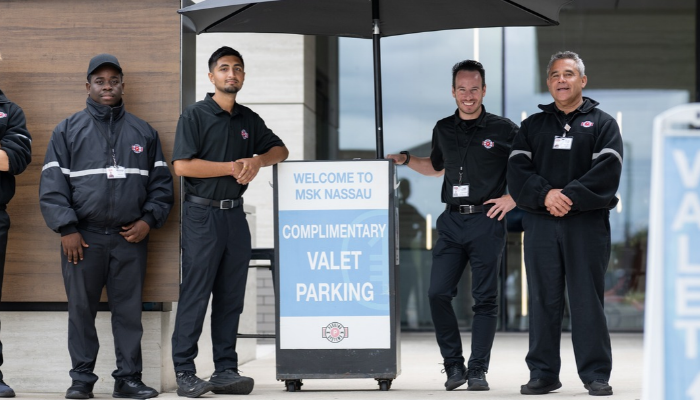
The same valet operation can be a cost line, a wash, or a revenue line depending on which of three payment models you run, and most businesses end up in one without ever choosing it.
The guest pays
Guests pay a posted rate at the stand. Where arrival is dense and paying for valet is expected, which describes most hotels, urban restaurants, and event venues, the revenue can cover the operating budget and sometimes exceed it. Your cost is the gap, if any, between what the stand collects and what the operation costs to run. Rates belong under review the same way room or menu pricing does, because no complaints at the valet stand usually means underpriced rather than priced right.
The business pays
Valet is complimentary and the entire operating budget is yours. This is common in fine dining, in medical offices, and anywhere arrival is part of what the property is selling. There is nothing wrong with it, but it should be accounted for honestly. This is a hospitality and guest services expense, and it deserves to be measured against covers, retention, or review scores rather than carried as a line nobody examines.
Validated or split
Guests who transact are validated and everyone else pays. It is the most common arrangement and the hardest to budget, because your exposure moves with your own validation policy rather than with volume. The valet operation at Riverside Village runs this way: a posted rate for general parking, a higher one on event days, and validation for guests dining at participating restaurants.
Who absorbs the validated cars, the restaurants or the property, is the term that decides what the model costs each party, and it is worth settling in writing before anyone signs. Retail parking management runs into this constantly, where a validated shopper, a restaurant guest, and an office tenant all arrive at the same structure carrying different entitlements.
Where volume will not cover the labor floor, operators ask for a subsidy or a minimum monthly guarantee. That is not a negotiating tactic. It is the arithmetic of a staffed shift that has to be covered whether eleven cars show up or ninety. The negotiation is over where the threshold sits and what happens above it.
Where Valet Costs Less Than the Alternative
Valet earns its cost wherever land is constrained, because stacking recovers usable capacity you are otherwise paying for in rent or turning away at the door.
“Valet only makes sense at luxury properties” is one of the more expensive beliefs in this category. Attendant-parked vehicles can be stacked in configurations self-parking cannot use, which recovers capacity inside the footprint you already have. Where the alternative is leasing overflow spaces, declining reservations at peak, or building, the comparison is operating cost against real estate cost rather than operating cost against nothing.
Residential parking management runs into this at condo and rental towers with fewer stalls than units, where an attendant-assisted program can be cheaper than leasing offsite spaces for the overflow and considerably easier than rewriting the allocation policy.
The same logic applies to constrained urban properties, where a lot that holds forty self-parked cars holds meaningfully more under attendant control. In those cases managed valet operations are not an upgrade to the arrival experience so much as a substitute for real estate you were otherwise going to rent.
What to Put in Front of an Operator
A valet proposal becomes comparable the moment you supply the arrival data, the coverage window, and the insurance limits, instead of asking three companies for a rate.
Proposals arrive incomparable because nothing in the request told the operators to build them the same way. Supply the following and that stops being true:
Arrivals by half hour, by day of week, for a representative month, out of your own POS or property management system
The coverage window you want staffed on each day, including event nights
Where the cars will park, and the timed round-trip distance
The payment model and the written validation policy
The insurance limits you require, including garagekeepers, with a sample certificate
A staffing plan by position and shift, with the hourly rate for each position
A line-item operating budget on a template you supply
References at properties with comparable arrival patterns, and permission to call them
Hand three operators that packet and the hourly rate stops being the interesting number, because you can finally see what each rate is buying. If you are building the document from scratch, how to write a parking management RFP covers the same scope elements, and most of them transfer directly to a valet solicitation.

Start With Your Own Arrival Data
An hour with your own arrival numbers settles most of this before any operator is involved, and it is the part nobody else can do for you.
Pull arrivals by half hour for a representative month, separated by day of week
Mark the busiest 45 minutes of your busiest day, because that is what you are staffing to
Time the round trip from your door to where cars actually park, at the hour it matters
Decide the payment model and write the validation policy down
Confirm the insurance limits your counsel or risk team requires
Then ask for proposals, and hold every one of them to the same format
Steps one through five cost you an afternoon and they change what step six returns. When you are ready for that step, you can request a valet proposal with the arrival data already in hand, which is the only version of that conversation where the numbers coming back mean anything.
Valet is one of the few parking decisions where the cheapest proposal and the right proposal are rarely the same document. The number that matters is not the rate. It is what the rate is staffing, and whether it holds on the night you would most hate for it not to.