Parking management companies charge through one of four contract structures, and in most of them the management fee is a far smaller number than the reimbursable expenses running underneath it.
That is the part owners tend to learn after signing. The fee gets negotiated hard because it is the one figure that sits on a single line and can be compared across proposals. The expenses get approved once as an annual budget, re-forecast quietly, and reconciled by nobody. Two years on, the fee sits exactly where it was negotiated and the operating line has grown anyway.
What follows covers what each structure assigns to whom, how the fee itself is calculated, which costs sit underneath it, and what is worth negotiating instead of the fee.
The Four Structures and What Each One Assigns to You
The contract structure decides who collects the revenue, who carries the operating expense, and who absorbs the shortfall when volume drops, which is a larger question than any fee percentage attached to it.
Management agreement
The operator runs the facility as your agent. Gross revenue belongs to you, operating expenses are yours, and the operator charges a fee for running the operation. You keep the upside when volume grows and you keep the downside when it does not. This is the most common structure for owner-operated assets, and it is the one that gives you the most visibility, because every dollar collected and every dollar spent passes through a settlement report you can audit.
Cost-plus
A variant of the management agreement in which the operator's compensation is calculated as a percentage of operating expenses. It is often presented as the transparent option, on the logic that you see every line. The structural problem is the opposite of transparency: marked-up expenses are the operator's revenue, so nothing in the arrangement rewards them for spending less. Read any cost-plus proposal with that incentive in mind.
Lease
The operator pays you fixed rent, keeps all revenue, and carries all expenses. Your income becomes predictable and your involvement drops to almost nothing. What you give up is rate authority, upside above the rent number, and visibility into what the asset actually produces. Leases make sense where the owner genuinely wants parking off the books. They are a poor fit where parking touches tenant, patient, or guest experience, because you no longer control the service standard.
Revenue share and hybrids
The operator takes an agreed percentage of gross or net revenue, or a reduced base fee plus an incentive on performance above a threshold. Hybrids are the most common modern structure for assets with real revenue upside, because they put the operator's compensation on the same side of the ledger as yours. The negotiation is entirely about the threshold and the definition of the measure. An incentive on gross revenue rewards volume. An incentive on net operating income rewards volume and expense control together, which is usually what you want.

How the Management Fee Itself Is Calculated
The fee is quoted in one of four ways, and the method matters because it determines what the operator is being paid to maximize.
A flat monthly fee is fixed regardless of performance. It is simple, easy to budget, and neutral: the operator has no financial reason to grow revenue or to suppress it. A percentage of gross revenue rises with collections and rewards volume, but not margin. A per-space monthly rate scales with facility size rather than performance, which suits large surface assets with stable utilization. An incentive or tiered fee pays a base plus a share above a defined performance level.
Ask which method a proposal uses before comparing the number attached to it. A flat fee of one figure and a gross-revenue percentage that produces the same figure in year one will diverge sharply by year three, and the direction of that divergence is a decision you are making whether or not you notice you are making it.

What Actually Sits Underneath the Fee
On a management agreement, the reimbursable operating budget is where nearly all of the money is, and it is the part of the proposal owners read least carefully.
The recurring categories are payroll and payroll burden, insurance, credit card processing fees, uniforms and supplies, ticket stock and signage, licensing and permits, equipment service contracts, and repairs. Payroll and burden alone typically dominate everything else combined. Burden covers payroll taxes, workers' compensation, unemployment insurance, and benefits, and it is expressed as a percentage applied on top of wages.
Labor cost is also the category moving fastest. Valet wages in competitive markets have moved from roughly twelve to fifteen dollars an hour to sixteen to twenty dollars and above, according to valet industry trend reporting from 2026. A staffing plan priced against last year's wage assumptions will not hold, and the gap surfaces as coverage failures rather than as a budget conversation.
Licensing is a real cost in some markets and an afterthought in others. The New York City Department of Consumer and Worker Protection licenses more than 1,600 parking lots and garages, with a license required at five or more vehicles, which is one of several reasons New York City parking operations carry a different cost profile than the same facility would in a smaller market. Repairs and preventive work are usually reimbursable too, and whether they are performed in house or subcontracted changes what you pay, which is worth confirming when you review the scope for parking facility maintenance.
Equipment and systems sit in this budget as well, either as a service contract on existing hardware or as a line for replacement. If a proposal is quiet about the condition of the revenue control equipment, that silence is a future capital conversation, not an absence of one. Ask what the operation will run on and what our revenue control technology is expected to do with the data it captures.

The Line Items That Make a Low Fee Expensive
Several standard entries in an operating budget can move real money without ever touching the negotiated fee, and each one is worth a specific question during evaluation.
Payroll burden charged as a fixed percentage rather than at actual cost is the most common. If burden is billed at a set rate and the operator's true loaded cost is lower, the difference is margin. Insurance allocation works the same way when it is charged as a percentage of payroll or revenue instead of at the actual premium for your location.
Administrative and accounting charges appear as a separate line on top of the management fee in many proposals, covering payroll processing, reporting, or corporate support. That is a second fee. It should be evaluated as one. Marked-up subcontracted work, whether maintenance, shuttle service, or security, carries the same issue, and the markup is rarely stated unless you ask.
Then there are the terms that only bite later: annual escalators applied to the fee, the burden rate, or both; capital expenditure thresholds set high enough that meaningful spending never requires your approval; and auto-renewal clauses with a notice window narrow enough to miss. None of these change the headline number. All of them change what you pay.
Why Two Proposals for the Same Garage Do Not Compare
Operators format their numbers differently by default, which means the proposals arriving on your desk are not measuring the same thing even when they are describing the same facility.
One will quote a fee and exclude insurance from the operating budget. Another will bury insurance in a burden percentage. A third will show a lower fee and a separate administrative charge. A fourth will propose a revenue share against a definition of gross revenue that excludes validations. Comparing the four on fee alone produces a ranking with no relationship to what the operation will cost.
The fix is to require one format. Specify the expense categories, the burden treatment, the insurance basis, and the reporting package you expect, then require every respondent to price against that structure and to state a fully loaded annual cost. This is the actual work a parking management RFP does, and it is why the document is worth writing carefully even when you are only talking to two operators. Whatever you specify becomes the thing you can later hold them to.
Request a redacted sample settlement report from each respondent as part of that package. A proposal describes what an operator intends to do. A sample report shows what they actually produce every month, and the difference between the two is usually visible immediately.
What to Negotiate Instead of the Fee
The terms that determine cost over a full contract term are almost never the fee, and they are routinely conceded in exchange for a fee reduction that costs the operator less than the terms would have.
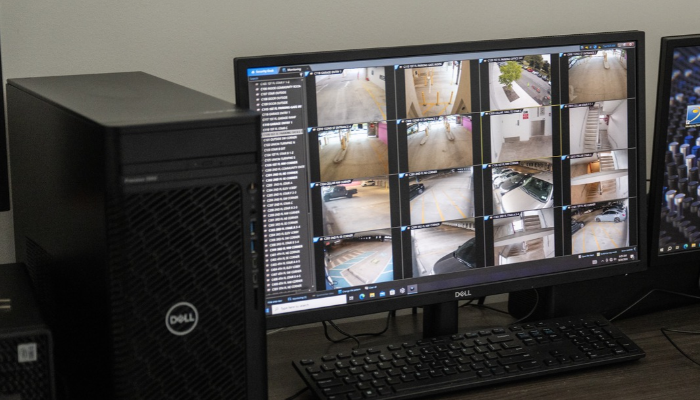
Audit rights come first. You need the contractual ability to examine records, reconcile system revenue against independent vehicle counts, and do so without giving extended notice. Revenue leakage is designed not to be noticed: an Orange County Comptroller audit reported in 2025 found a single convention center attendant had diverted roughly 57,000 dollars using a personal card reader, discovered only after cameras went into the toll booths. A separate audit finding reported in 2019 identified a Miami operator underreporting nearly 900,000 dollars. Neither was caught by reading a monthly report.
Then negotiate expense caps by category, capital approval thresholds low enough to be meaningful, direct access to the revenue control system rather than access mediated through the operator, and performance standards with defined consequences. Add a clear termination provision and a written mobilization plan. A contract that is easy to exit is a contract the operator has a reason to perform under.

Which Structure Fits Which Asset
Structure selection follows the asset's revenue profile and how closely parking touches the experience the property is judged on. The same garage can be a reasonable lease candidate or a bad one depending entirely on what sits above it.
Assets with a predictable monthly parker base and stable utilization tend to work on a management agreement with a performance incentive. That is the common pattern in office parking management, where the owner wants rate authority and also wants the operator to have a financial reason to chase occupancy. Post-hybrid utilization shifts make the incentive threshold the piece to negotiate carefully, because a threshold set against 2019 volume is not a threshold.
Facilities with complex user segmentation are poor lease candidates, because rate and policy authority has to stay with the institution. In hospital parking management the operation is serving patients, staff, and vendors with different access rights and different tolerance for friction, and every one of those decisions has a service consequence that a rent check does not price. A management agreement keeps those decisions where they belong.
Where the arrival experience is part of the brand, the structure has to keep service standards enforceable by the property rather than handed over with the revenue. That is the governing constraint in hotel parking management, where valet volume and covers are linked and a brand standard review can turn a parking decision into a franchise conversation. Revenue share works here, provided the performance standards have real consequences attached.
Residential assets run mostly on permits and resident allocation with limited transient revenue, so multifamily parking is more often a flat-fee management engagement than a revenue share. There is rarely enough upside for an incentive to mean anything. What the owner or board is buying is coverage, a written policy, and someone other than on-site staff handling enforcement.
Retail sits at the other end again. Validation and free customer parking mean that retail parking management frequently runs as a cost center rather than a revenue center, which changes the question from what the asset earns to what it costs to keep staffed, clean, and enforced against employee and commuter abuse. A flat fee usually fits, and the negotiation moves to staffing hours and enforcement scope.
Any asset adding shuttle service should price that scope on its own rather than folding it into the parking budget. Vehicle cost, driver labor, fleet insurance, and maintenance make shuttle and transportation programs a different cost structure than a garage, and combining the two into one line is how owners lose track of what each is actually costing them.

Before You Take It to Bid
The useful preparation is arithmetic, not vendor research, and it can be done before you contact anyone.
Build your fully loaded current cost, including wages, burden, insurance, supervision, recruiting, turnover, and the internal staff time parking consumes. That is the number an operator's fee has to be measured against, and it is almost never the number owners start with. Pull your current contract and find the notice window, the escalator, and the capital threshold. Then decide which structure you actually want before the first proposal arrives, because the proposals will otherwise decide it for you.
When you are ready to put it in front of operators, the request for proposal process is where the specification gets written down and made comparable.