The choice between a management agreement and a lease decides who collects the parking revenue, who carries the operating expenses, and who controls the rates.
Most owners arrive at this question sideways. A contract is expiring, or ownership asked what the garage is actually worth, or someone in procurement was handed the assignment to take parking out to bid. By the time proposals come back, two operators have priced a management fee, one has offered to lease the facility outright, and the numbers cannot be compared in any honest way. The structure question should have been answered before the solicitation went out, because it determines what the proposals are even quoting.

What a Management Agreement Assigns
Under a management agreement, the owner keeps the parking revenue and pays the operator to run the facility, which means the owner keeps both the upside and the exposure that comes with it.
The operator recruits, hires, trains, schedules, and supervises the staff. It handles cash and card collection, opens and closes the facility, manages the access equipment, responds to incidents, and reports what came in and what went out. Revenue flows to the owner, either directly into an owner-controlled account or through a settlement process on a defined cycle. Payroll, uniforms, supplies, and insurance are typically reimbursed as operating expenses, and the operator is paid a management fee on top, usually a fixed monthly amount and sometimes a fixed amount plus an incentive tied to performance.
Two things stay with the owner that owners frequently assume they are giving up. Rate authority stays with the owner. Parking policy stays with the owner. A well-drafted management agreement assigns operations, not pricing and not access rules, which is why the objection that outsourcing means losing control of the asset usually reflects a badly written agreement rather than the structure itself. This is the standard shape of full-service parking management for owner-operated assets.
The tradeoff is that the owner carries the demand risk. If utilization drops because a tenant leaves or hybrid schedules thin out Fridays, the revenue line drops with it and the fee does not.
What a Lease Assigns
Under a lease the operator pays the owner rent for the right to run the facility, keeps the revenue it collects, and absorbs the expenses, which converts a variable operating line into a predictable one.
The owner receives a fixed payment on a schedule and stops touching the operation. No payroll to reimburse, no expense line to audit, no settlement report to reconcile, no coverage problem to escalate. For an owner who wants parking off the weekly problem list entirely, a lease does that more completely than any other structure.
What the owner gives up is everything above the rent. If the market moves, if a new venue opens nearby, if rates were set low and could support more, the operator captures that. Rate control usually moves to the operator as well, which matters more than it sounds when the facility serves the owner's own tenants, patients, or residents. An operator with an incentive to maximize transient yield may price monthly parkers in a way the owner would not have chosen, and the complaints still land on the property.
Leases also change who is responsible for the physical asset. Structural repair almost always stays with the owner, but the line between structural work and routine upkeep is where lease disputes actually happen. Whether the operator or the owner handles sweeping, lighting, striping, drainage, and pressure washing should be written out rather than assumed, because parking facility maintenance is the cost category most often left ambiguous in a lease and most often argued about in year three.

Revenue Share and Guarantee Structures Sit Between the Two
Most real parking contracts are not pure management agreements or pure leases, because a minimum guarantee with a revenue share above it splits the risk in a way that suits owners who want floor protection without giving away the ceiling.
The common version is a guaranteed annual or monthly payment to the owner plus a percentage of gross above a defined threshold. The owner gets a floor that behaves like rent and a participation that behaves like ownership. The operator gets a reason to actually grow the revenue rather than to protect a fee. Where the threshold sits is the whole negotiation, and it should be set against real utilization data rather than against last year's reported gross.
Cost-plus deserves a specific warning. Under cost-plus, the operator's marked-up expenses are the operator's revenue, so the structure contains no built-in incentive to reduce them. Owners often accept cost-plus believing it is the transparent option because every expense is visible. Visibility is not alignment. If cost-plus is on the table, expense caps and capital approval thresholds are not optional terms.

The Four Questions That Decide Which Structure Fits
The structure decision comes down to four questions about the owner's own position, and answering them honestly is faster than modeling three scenarios.
Does ownership need predictable income more than it needs upside? Predictability points to a lease or a guarantee. Upside points to a management agreement.
Does the owner need to control rates and access policy? Tenant, patient, and resident parking almost always says yes, which points to a management agreement.
Is there reason to believe the facility is underperforming? If rates have not been revisited in years or utilization has never been measured, leasing now locks in the current performance and hands the recovery to someone else.
Can the owner carry the reporting and audit burden? A management agreement requires someone on the owner's side to read a settlement report and reconcile it. If nobody will, the structure's main advantage goes unused.
The third question is the one most often skipped, and it is the expensive one. Signing a lease before anyone has measured what the facility actually does is how owners discover, two years in, that they leased away a performing asset at a distressed number. A short parking consulting engagement that establishes real utilization, current leakage, and market rate position costs a fraction of the difference and gives ownership something defensible to point at.

What Each Structure Does to Parking NOI
Parking income capitalizes into property value the same way any other net operating income line does, so the structure choice is a valuation decision and not only an operating one.
Under a lease, the parking contribution to NOI is the rent, clean and stable and easy to underwrite. Under a management agreement, the contribution is gross revenue less operating expenses less the management fee, which is more volatile and more work to report but has no ceiling on it. At a given cap rate, an incremental dollar of parking NOI moves asset value by the same multiple as an incremental dollar from anywhere else in the building, which is the argument for keeping the upside when there is upside to keep.
The practical test is whether the owner's organization will actually do the work that a management agreement rewards. Setting rates against the market, adjusting the monthly and transient mix, and reconciling revenue are ongoing activities. Where nobody owns them internally, the operator should be contractually responsible for proposing rate changes on a defined schedule, and the owner should retain approval. Structuring monthly parking programs with defined waitlist and pricing review procedures is one place where a management agreement produces measurably more than a lease, because the operator is proposing and the owner is deciding.

How Property Type Shifts the Answer
Asset class changes the weighting of the four questions, because who parks in the facility determines how much rate and policy control the owner can afford to give up.
Office and commercial properties usually favor a management agreement, since parking is a tenant amenity and a leasing conversation before it is a revenue line. Handing rate authority to a third party when parking shows up in tenant renewal negotiations creates a conflict the owner will feel at the worst moment. Office parking management under a management agreement keeps validation, tenant allocation, and visitor policy where the leasing team can reach them.
Hospitals and campuses have almost no realistic lease option. Segmentation between patients, staff, and vendors is a policy function tied to patient experience scores, and complimentary or discounted patient parking is a decision no administrator wants an operator making on revenue grounds. Hospital parking management works as a management agreement with defined service levels and coverage requirements at arrival peaks.
Residential and condo properties sit in a similar position, since resident allocation, guest parking, and enforcement policy carry legal exposure for the association and belong in the association's control. What a board usually wants from residential parking management is the confrontation moved off site, not the policy handed over.
Standalone commercial garages and lots with mostly transient demand and no captive tenant base are where a lease or a guarantee genuinely competes, because there is no internal constituency whose experience the rate structure has to protect.
Public-sector facilities have their own constraint set. Procurement rules, public rate hearings, and audit obligations generally push toward a management agreement with detailed settlement reporting, because the structure has to survive a council meeting and an auditor. Parking Systems operates in that environment, including the county-owned Justice Center Garage in West Chester, Pennsylvania and the Queens Borough Hall Municipal Parking Garage in Kew Gardens, New York.
The Terms That Matter More Than the Structure Label
Owners routinely negotiate hard on the management fee or the rent number and then accept boilerplate on the terms that actually determine what the contract produces over five years.
Whichever structure is chosen, these belong in the document:
Audit rights, with the owner's right to inspect records and reconcile system revenue against independent counts, and who pays for the audit if it finds a variance
Expense caps and capital approval thresholds, so no single expenditure above a stated dollar amount happens without written owner approval
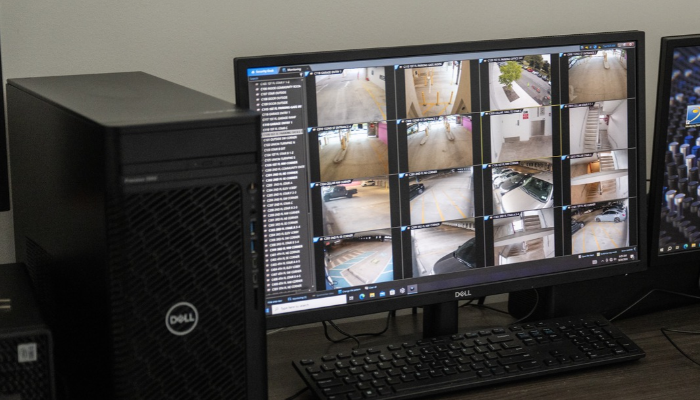
System and data access, meaning the owner can log into the revenue control system directly rather than receiving a monthly summary of it
Performance standards with defined coverage levels at named times, and a remedy when they are missed
Mobilization and transition terms at both ends, including staffing overlap on the way in and record handover on the way out
Insurance and indemnification, including who carries garagekeepers coverage and at what limits
Leakage is designed not to be noticed, which is why audit rights matter more than any assurance in a proposal. A single convention center attendant in Orange County diverted roughly $57,000 through a personal card reader, and it surfaced only after cameras were installed in the toll booths, per the county comptroller's audit reported in 2025. Auditors found a Miami operator had underreported nearly $900,000 in revenue in a 2019 finding. Neither situation is prevented by choosing the right structure. Both are surfaced by having the right to look.
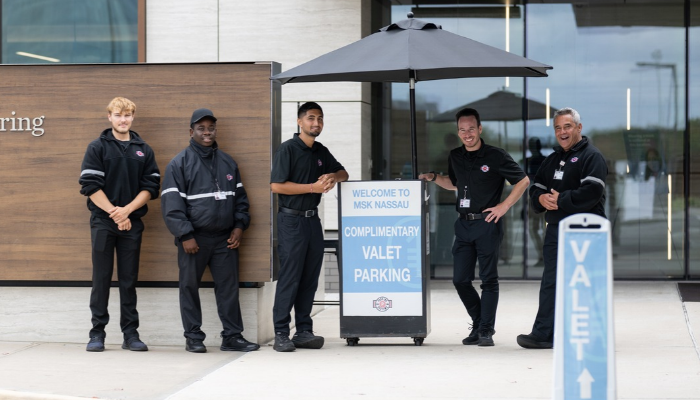
Where valet is part of the operation, custody adds a liability question the structure has to answer explicitly. Valet is generally treated as a bailment, which shifts the burden of proof to whoever held the keys, and courts frequently decline to enforce disclaimer signage. The contract should name who carries the coverage for valet parking services and at what limits, regardless of whether the deal is a lease or a management agreement.
Licensing is worth confirming in the primary market as well. New York City requires a license for a lot or garage handling five or more vehicles, and the Department of Consumer and Worker Protection licenses more than 1,600 of them. The contract should state who holds the license, who maintains it, and what happens to it at termination.

Putting the Structure Question in Your RFP
A solicitation that leaves the structure open produces proposals that cannot be compared, because a fee bid and a rent bid answer different questions and no scoring rubric reconciles them.
There are two workable approaches. State the structure the owner wants and require every proposal to price it, which produces clean comparability at the cost of foreclosing an option. Or invite both, and require each respondent to submit a management agreement version and a lease or guarantee version on identical assumptions about utilization, hours, staffing levels, and expense responsibility, priced on a form the owner supplies. The second takes more work to set up and produces a materially better decision, because the same operator pricing the same facility both ways shows exactly what it believes the upside is worth.
Either way, the solicitation should specify the revenue and utilization data the owner is providing, the staffing levels expected at named times, the expense categories each party carries, and the reporting format required.

Where Owners Get This Wrong
The recurring mistakes are decision-process failures rather than analytical ones, and they repeat across property types and markets.
Letting the contract auto-renew is the most common. The window to restructure closes quietly and the current terms carry for another full term. The calendar entry to start reviewing belongs twelve to eighteen months before the expiration date, not ninety days before it.
Choosing the structure to match the last operator's proposal is the second. If the incumbent has always operated under cost-plus, that is evidence of what the incumbent prefers, not of what fits the asset.
Treating the low number as the answer is the third. A rent bid that looks generous may be underwriting rate increases the owner will have to defend to tenants. A management fee that looks cheap usually encodes a staffing plan that will not hold past the second quarter, and the shortfall reappears as coverage failures rather than as a line item.
What to Do Next
The structure decision improves substantially with two inputs: real utilization and revenue data for the facility, and a comparable price from an operator under both structures.
Parking Systems operates garages, surface lots, and valet stands across New York, New Jersey, Pennsylvania, Georgia, and South Carolina under a range of contract structures, and can price a facility both ways so the comparison is apples to apples. Request a parking management proposal with the property address and current operating details, and we will come back with what each structure would actually produce.